Program
The iVCEES-2026 will be held from November 30 to
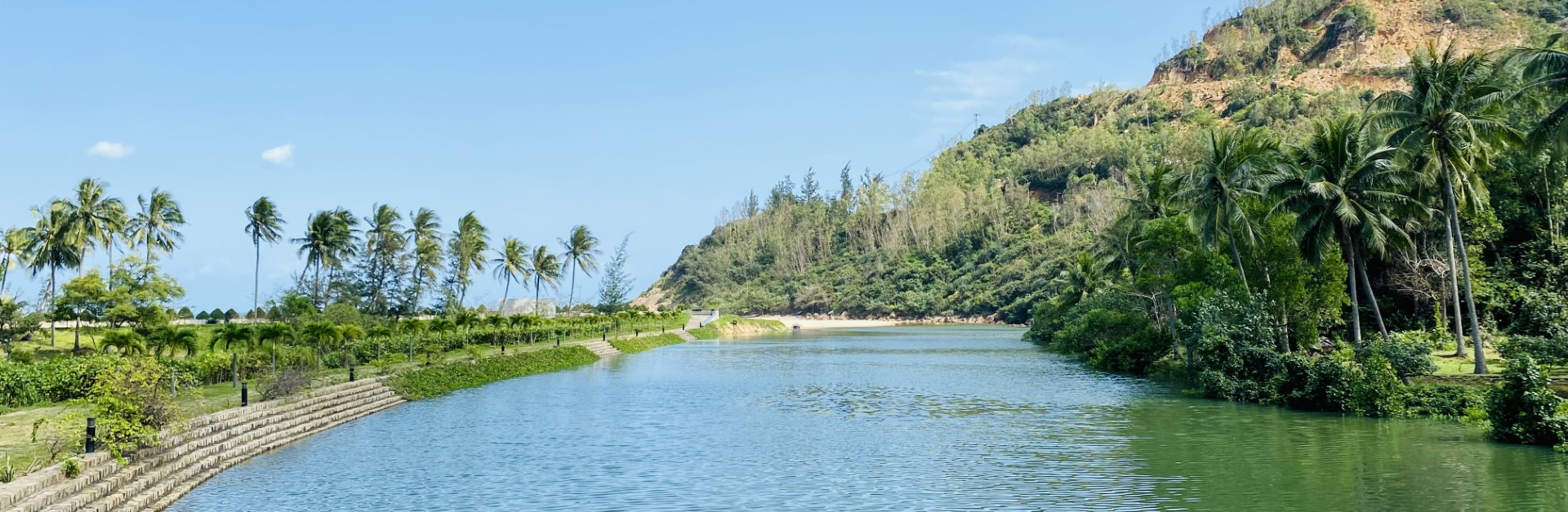
December 04, 2026 at the International Centre for Interdisciplinary Science and Education
(ICISE), Quy Nhon, Vietnam.
The iVCEES aims to be a premier interdisciplinary forum for researchers, practitioners, and
educators to share and discuss the latest findings, trends, challenges, and advancements in
the fields of Earth and Environmental Sciences. English is the official language for all
communications.
- S1: Biodiversity and Conservation: Harmony with Nature and Sustainable Futures
(Convener: Girley S. Gumanao, Davao del Norte State College)
The session highlights biodiversity—the diversity of life on Earth, including genetic variation, species diversity, and the multitude of ecosystems that extend from mountain ridges to coral reefs. It also covers various conservation initiatives designed to protect these natural resources and support ecological balance including the transition from extractive and exploitative practices to regenerative approaches and the integration of local knowledge and Indigenous Peoples’ wisdom, governance and advocacy /education in promoting effective, inclusive, and sustainable conservation efforts. - S2: Multi-scale functioning and variability at of the regional ocean-atmosphere
climate system
(Conveners: Marine Herrmann - IRD LEGOS, and Ngo Duc Thanh –
USTH)
South-East Asia is a unique region in terms of climate, characterised by a complex topography featuring numerous ocean basins and thousands of islands, playing a vital role in the exchanges of water, heat and salt between the atmosphere and two major ocean basins (the Pacific and the Indian Oceans), and hosting a dense coastal population, which is both dependent on the resources associated with this system and subject to the influence of its climate variability. Understanding this system is thus essential to grasp its response to various factors of variability and anticipate their effects on populations.
This session focuses on the observation, modelling and understanding of the various oceanic and atmospheric processes and phenomena that govern the functioning and variability of the system across different temporal scales (from extreme events to long-term variability) and spatial scales (from fine-scale and coastal processes to the regional scale), and their interactions. - S3: From rivers to the coastal ocean: dynamics and transfers across the
land–ocean continuum (Conveners: Alexis Chaigneau - IRD LEGOS, and Nadia Ayoub -
CNRS LEGOS)
Rivers, estuaries, deltas and coastal lagoons play an important role in the transfer and transformation of water, sediments, nutrients and contaminants from continental systems to the coastal ocean. These transitional environments result from complex interactions between hydrodynamic processes, biogeochemical cycling and anthropogenic pressures.
This session focuses on the multidisciplinary dynamics of the land-ocean continuum, from river systems to coastal waters, with particular attention to estuarine, deltaic and lagoon environments. We welcome contributions addressing physical and biogeochemical processes, as well as the transport and fate of matter and contaminants. Studies drawing on in-situ observations, remote sensing or modelling are encouraged. Contributions addressing coastal processes and interfaces are also welcome, including studies on coastal circulation, shoreline dynamics, saltwater intrusion, and nearshore sediment transport.
While the session primarily focuses on physical and biogeochemical controls on water and material fluxes, interdisciplinary contributions incorporating ecological, biological or social science perspectives are also welcome. The session aims to advance our multidisciplinary understanding of land-ocean exchanges and their implications for coastal environments under increasing natural and human pressures - S4: Remote Sensing and GIS Applications (Convener: Tong Si Son -
USTH)
Advances in remote sensing and Geographic Information Systems (GIS) have greatly enhanced our ability to monitor and analyze environmental and socio-economic processes across multiple spatial and temporal scales. Earth observation data from satellite, airborne, UAV, and ground-based platforms, combined with geospatial analysis, provide valuable insights for understanding environmental change and supporting sustainable management.
This session welcomes contributions on the development and application of remote sensing and GIS for studying land, water, atmosphere, coastal and marine environments, ecosystems, natural hazards, and climate change, particularly in Southeast Asia. Studies using optical, radar, LiDAR, hyperspectral, or multi-sensor datasets are encouraged, as are applications of machine learning, artificial intelligence, and geospatial modelling. Contributions integrating remote sensing, GIS, field observations, and numerical models to improve environmental monitoring, assessment, and decision-making are especially welcome. The session aims to foster interdisciplinary exchange on innovative geospatial technologies and applications, highlighting their role in addressing scientific, environmental, and societal challenges in a rapidly changing world. - S5: Solid Earth Dynamics and Surface–Environment Interactions (Conveners:
Nguyen-Van Huong & Nguyen Thuy Duong - VNU University of Science-VNU
Hanoi)
This session seeks to bring together early-career and established researchers worldwide working in Solid Earth Sciences, with particular emphasis on the tectonic evolution of Southeast Asia. It focuses on the coupling between tectonics, magmatism, metamorphism, and lithosphere–mantle dynamics with geomorphology, sedimentary systems, and basin evolution. Emphasis is placed on studies linking deep Earth processes to surface responses, sediment flux, environmental change, and natural hazards across multiple temporal scales, from deep-time evolution to modern processes. - S6: Environmental Pollution and Risk Assessment in a Changing Environment
(Conveners:
Tran Ba Quoc - Duy Tan University, and Nguyen Ly Sy Phu - University of
Science-VNUHCM)
Environmental pollution is a critical global challenge, intensified by rapid urbanization, industrial activities, and climate change, particularly in developing regions. Understanding pollutant sources, distribution, and associated risks is essential for effective environmental management and sustainable development. This session focuses on the occurrence, transport, and transformation of pollutants in air, water, and soil systems, emphasizing advanced approaches for source apportionment (e.g., receptor models and machine learning) and quantitative ecological and human health risk assessment. Contributions addressing uncertainty analysis, probabilistic modeling, and integrated assessment frameworks are encouraged. The session aims to foster interdisciplinary exchange and deliver science-based insights to support pollution control and risk mitigation in a rapidly changing environment - S7: Vegetation in the carbon cycle: role of forests and agriculture (Conveners:
Alexandre Bouvet - IRD CESBIO)
Vegetation is a key component of the carbon cycle, acting as both a sink (e.g. carbon stored in forest biomass) and a source (e.g. forest disturbance or methane emissions from rice fields) of greenhouse gases. In Southeast Asia, carbon dynamics are shaped by rapid land-use change, including deforestation, agricultural emissions, and climate variability.
This session welcomes contributions that examine the role of forests and agricultural systems in regional carbon cycling. We invite studies based on in situ measurements (forest inventories, eddy covariance flux towers, closed-chamber measurements,…), remote sensing, and modeling, particularly those that integrate approaches or address uncertainties. Submissions highlighting implications for carbon management, sustainable land use, and climate mitigation in Southeast Asia are especially encouraged. - S8: Multi-scale Hydrodynamics and Coastal Engineering Modelling in Southeast
Asia (Convener: Tran Anh Duong - Van Lang University)
Coastal regions around the world are among the most dynamic and complex environments, characterized by diverse hydro-geomorphological settings such as dense river networks, extensive deltas, estuaries, and island systems. These features, combined with the influence of tides, waves, currents, atmospheric forcing, and extreme events (e.g., storms and surges), create highly variable, multi-scale hydrodynamic systems. At the same time, coastal zones are increasingly impacted by climate change, including sea-level rise, saltwater intrusion, and the growing frequency and intensity of extreme events. These regions also host a large proportion of the global population, many of whom depend directly on coastal resources and infrastructure. Therefore, research in hydraulics and modelling within coastal engineering plays a critical role in understanding governing physical processes and supporting effective coastal planning, infrastructure design, and sustainable management worldwide.
This topic focuses on the observation, development, and application of hydrodynamic models, wave–current interactions, sediment transport, and coastal morphodynamics to advance the understanding of interactions among oceanic, estuarine, and coastal systems across multiple spatial scales (from local infrastructure and estuaries to regional and global domains) and temporal scales (from extreme events to long-term evolution). It also emphasizes the integration of in-situ measurements, remote sensing, and numerical modelling to enhance forecasting capabilities, risk assessment, and the development of adaptive engineering solutions in response to global climate change. - S9: Navigating Hydrological Uncertainties in the Anthropocene (Convener: Do Xuan
Hong - Nong Lam University-HCMC)
As human activities fundamentally reshape the Earth’s systems, the traditional frameworks for predicting hydrological patterns are being pushed to their limits. This session explores the multifaceted uncertainties arising from the intersection of climate change, rapid urbanization, and intensified land-use practices. The session invites research that investigate the complexities of hydrological responses in a changing climate; quantify the impact of infrastructure, irrigation, and urban expansion on the water cycle; develop robust strategies for water security despite deep epistemic and aleatory uncertainties